
Fort Sheridan's historic military architecture blends with contemporary residential properties along tree-lined streets where brick colonials and Tudor revivals dominate. Properties face compacted subsoil from decades of institutional use, poor surface drainage from original grading systems, and heavy clay composition that complicates root establishment. Our network of landscape architects in Highland Park understands how to amend soil structure, engineer proper drainage pathways, and select plantings adapted to filtered light conditions in outdoor spaces that look great and hold up through Lake Michigan's freeze-thaw cycles.
And that is why more and more owners of properties in Fort Sheridan, IL, are trusting Chop Chop Landscaping to bring out the full potential of their outdoor spaces.


Prefer to Talk to An Expert?
(847) 744-8080
Why Fort Sheridan Homeowners Trust Local Professionals to Get It Right
With experience rooted in the neighborhood, these professionals understand the historic property lines, lakefront wind exposure, and legacy infrastructure unique to the area, which is why every service is completed with the tools and techniques best suited for Fort Sheridan homes, adapted for compact clay soils, shade-dominant yards, and seasonal moisture fluctuations common in this part of Highland Park.
From professional lawn care installations along Sheridan Road to erosion control projects near the bluff areas, each project is handled with precision and long-term results in mind.
If you take pride in your property, let local contractors help keep your yard structurally sound, visually balanced, and true to the character of Fort Sheridan!
Our Landscaping Services in Highland Park, IL, Include
A Service Area Designed to Fit Your Fort Sheridan Neighborhood
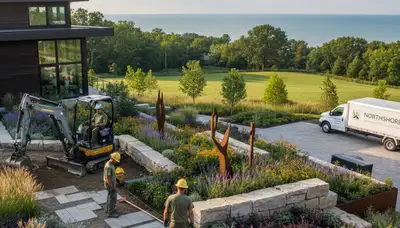
The Georgian and Colonial Revival homes and generous lot sizes of your neighborhood demand service solutions that are anything but one-size-fits-all. That is why local professionals bring tailored approaches to every sloped front yard and shaded backyard.
It does not matter if it is a brick two-story near the old parade grounds, a renovated officer's residence along Lyster Road, or a lakefront property near the eastern edge.
From expert lawn aeration and spring cleanup to native plantings and seasonal mulching, services are built around the neighborhood's character and the specific needs of each property.

Fort Sheridan's Military Heritage, Rooted in History
Fort Sheridan is a former U.S. Army installation established in 1887 and decommissioned in 1993, transformed into a residential enclave surrounded by forest preserve and lakefront access. But that history is still present in the compacted subgrade soils, outdated stormwater infrastructure, and non-native ornamental plantings that shape how landscaping must be done here today.
Compacted Clay Subsoils from Institutional Use
Many properties in Fort Sheridan, especially in areas near former barracks and administrative buildings, sit on heavily compacted clay soils that resist water infiltration and limit root penetration. This leads to surface pooling after rainfall and shallow root systems that fail during drought, putting turf health and foundation stability at risk.
Local professionals correct compaction issues with deep core aeration, organic matter incorporation, and strategic grading adjustments, preventing long-term damage.
Shade Management Under Mature Canopy Trees
The neighborhood's towering oaks and maples add historic charm and cooling benefits, but they often cause dense shade that limits turf growth and encourages moss proliferation. Competing root systems deplete soil nutrients and moisture, leading to thin grass coverage and bare patches beneath canopy drip lines.
Professionals manage these spaces with shade-tolerant seed blends, selective pruning for light penetration, and mulched groundcover transitions, adapted to existing root zones and light conditions.
Aging Ornamental Beds and Overgrown Foundation Plantings
Years of minimal maintenance and outdated plant selections have left many Fort Sheridan foundation beds struggling to provide curb appeal or functional screening.
Trusted pros revitalize these spaces through selective removal of invasive shrubs, installation of native perennials, and quality mulch installation, enhancing visual interest and reducing water demand.
Lakefront Wind and Winter Desiccation
Lake Michigan's proximity brings strong prevailing winds and harsh winter conditions, which can cause evergreen browning, branch dieback, and soil erosion on exposed properties.
Experienced crews install windbreak plantings using columnar evergreens, apply anti-desiccant treatments before winter onset, and stabilize slopes with deep-rooted native grasses, ensuring year-round resilience even under lakefront exposure.
Limited Access and Narrow Side Yards
Historic lot configurations and mature landscapes are common in Fort Sheridan, making equipment access and material delivery more complicated.
Local pros use compact machinery and hand-finishing techniques, prioritizing minimal turf disturbance and efficient project timelines to deliver landscaping that fits every property.
For ideas on how to bring the Fort Sheridan spirit into your property, request a free quote from a local professional in Fort Sheridan by calling (847) 744-8080.
Every property has potential. Let Chop Chop Landscaping help you unlock it!

Start your {category} project!
(847) 744-8080Landscaping in Fort Sheridan, IL: Services to Do All-Year-Round
From early spring thaw to late fall preparation, here is how local pros keep outdoor spaces functional, attractive, and resilient:
Spring Landscaping in Fort Sheridan, IL
- Soil Amendment and Aeration: Break up compacted clay layers and incorporate compost to improve drainage and root development after winter freeze-thaw cycles
- Debris Removal and Bed Preparation: Clear fallen branches, remove winter-damaged perennials, and refresh mulch layers in preparation for growing season
- Turf Overseeding: Introduce shade-tolerant fescue blends to thin areas under mature canopies where standard bluegrass struggles
- Drainage System Inspection: Check catch basins, swales, and downspout extensions for clogs or settling that could cause spring flooding
- Early Perennial Planting: Establish native wildflowers and ornamental grasses before summer heat stress, similar to landscape contractors in Lake Forest
Spring work sets the foundation for healthy growth through the rest of the season.
Summer Landscaping in Fort Sheridan, IL
- Deep Root Watering: Deliver moisture below the turf layer to support trees and shrubs during dry spells without encouraging shallow root systems
- Selective Pruning: Remove dead or crossing branches to improve airflow and reduce disease pressure in humid conditions
- Mulch Replenishment: Maintain three-inch mulch depth to retain soil moisture, suppress weeds, and moderate root zone temperatures
- Perennial Deadheading: Encourage repeat blooms and prevent self-seeding of aggressive ornamentals in mixed borders
- Erosion Control on Slopes: Install coir matting or plant deep-rooted groundcovers on exposed banks before summer storms intensify runoff
Summer services keep landscapes hydrated, healthy, and visually appealing through peak growing months.
Fall Landscaping in Fort Sheridan, IL
- Leaf Management: Remove heavy oak and maple leaf layers before they smother turf or create slippery walkways near entrances
- Lawn Fertilization: Apply slow-release nitrogen to strengthen root systems and improve spring green-up after winter dormancy
- Perennial Cutback: Trim back spent foliage while leaving seed heads for winter interest and wildlife habitat
- Bed Edging and Mulch Refresh: Redefine garden borders and top-dress beds to protect roots from freeze-thaw damage
- Gutter and Downspout Clearing: Ensure proper water diversion away from foundations before winter precipitation arrives, coordinating with yard maintenance in Highwood
Fall preparation protects plants and infrastructure from winter stress while setting up easier spring recovery.
Winter Landscaping in Fort Sheridan, IL
- Snow Removal and Ice Management: Clear driveways, walkways, and entryways promptly to maintain safe access during lake-effect snow events
- Evergreen Protection: Wrap vulnerable specimens or apply anti-desiccant sprays to prevent winter burn from wind and sun exposure
- Branch Inspection: Monitor trees for snow load damage or ice accumulation that could cause limb failure
- Hardscape Monitoring: Check for heaving pavers or cracked concrete from freeze-thaw cycles and plan spring repairs
- Winter Pruning: Remove dead or damaged wood while trees are dormant and structure is visible
Winter services maintain safety and protect landscape investments during Fort Sheridan's coldest months.
What Homeowners in Fort Sheridan Are Saying About Finding Local Landscaping Help
Real feedback from Fort Sheridan homeowners who used Chop Chop Landscaping to connect with trusted local landscaping professionals.